
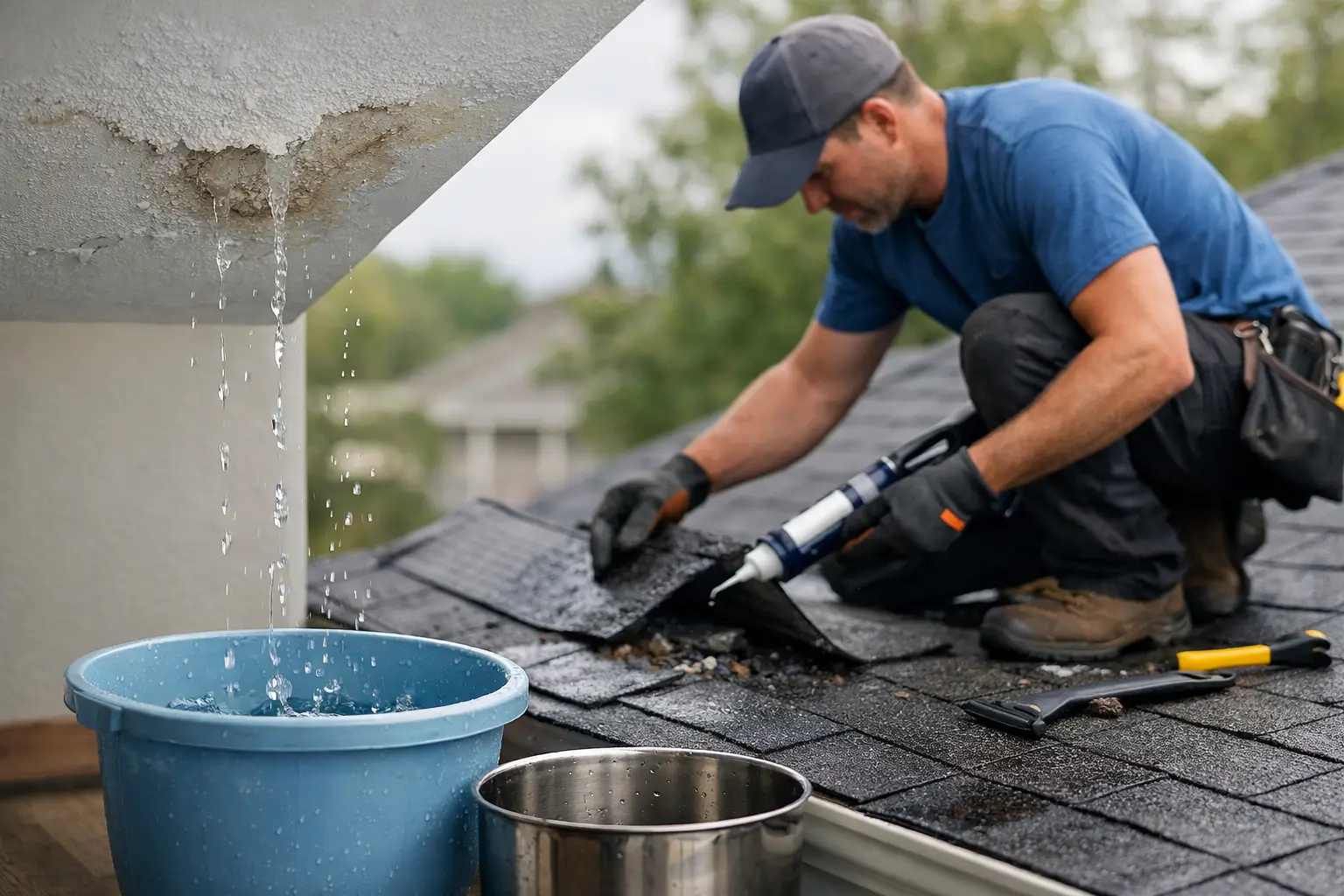
A small ceiling stain after a Colorado storm rarely stays small for long. Roof leak repair is one of those issues homeowners are tempted to put off for a week or two, but water usually keeps moving long after the rain stops. By the time the damage is visible indoors, the problem has often already reached underlayment, decking, insulation, or drywall.
That does not mean every leak turns into a full roof replacement. In many cases, a timely repair protects the life of the roof and keeps costs controlled. The key is knowing what causes leaks, what warning signs matter, and when a repair is the right solution versus a sign of something bigger.
Why roof leak repair matters quickly
A leaking roof is not only about the water you can see. Moisture has a way of spreading into attic spaces, running along framing, and soaking materials far from the original entry point. That is why the stain on a bedroom ceiling is not always directly below the damaged section of roof.
For Colorado homeowners, this gets more complicated after hail, heavy wind, snow buildup, and freeze-thaw cycles. A roof can look mostly intact from the ground while still having lifted shingles, punctured flashing, cracked sealant, or impact damage that lets water in. Fast action helps limit interior damage, but it also creates a clearer record if storm damage and insurance are part of the conversation.
Common causes of roof leaks in Colorado
Not every leak comes from old age alone. Weather, installation quality, and roof design all play a role.
Damaged or missing shingles
High winds can loosen shingles, break adhesive seals, or remove sections entirely. Once that protective layer is compromised, water can work beneath the surface and reach the underlayment or decking.
Flashing failure around penetrations
Chimneys, skylights, plumbing vents, and roof-to-wall transitions are common leak points. Flashing is designed to direct water away from these vulnerable areas, but if it rusts, separates, or was installed poorly, leaks often follow.
Hail and storm impact
Colorado storms can shorten the life of roofing materials faster than many homeowners expect. Hail may bruise shingles, knock granules loose, or create small fractures that are hard to spot without a trained inspection.
Ice dams and winter moisture issues
When heat escapes into the attic, snow can melt and refreeze at the roof edge. That trapped water may back up under shingles and create leaks even when the roof itself is otherwise in decent condition.
Aging materials and worn sealants
Roof systems do not fail all at once. Sealants dry out. Pipe boots crack. Fasteners loosen. These issues can often be repaired, but only if they are caught before water intrusion spreads.
Signs you may need roof leak repair
A leak does not always announce itself with dripping water into a bucket. More often, the early signs are subtle.
Water stains on ceilings or upper walls are the most obvious clue, especially if they expand after rain or snowmelt. Peeling paint, bubbling drywall, musty odors, and warped trim can also point to hidden moisture. In the attic, you might see damp insulation, darkened wood, mold growth, or sunlight coming through areas that should be sealed.
Outside, missing shingles, exposed nail heads, damaged flashing, sagging roof sections, and granules collecting in gutters all deserve attention. If your home has recently been through a hailstorm or wind event, even a roof that appears fine from the driveway may still need a professional inspection.
What to do when you notice a leak
The first priority is protecting your home and family. Move furniture, electronics, and valuables out of the affected area if you can do so safely. Use towels, a container, or plastic sheeting to limit interior damage. If the ceiling is bulging from trapped water, that may indicate pooling above the drywall, which should be evaluated carefully to avoid a sudden collapse.
It is also smart to document what you see. Take photos of interior stains, active drips, damaged shingles, and any debris from a recent storm. This can help with repair planning and may also support an insurance claim if storm damage is involved.
What homeowners should not do is climb onto a wet or damaged roof to investigate. Roof leaks are not always located where the water shows up indoors, and walking on compromised materials can make the problem worse or create a safety risk. A licensed and insured roofing contractor can trace the source more accurately.
Roof leak repair or roof replacement?
This is one of the most common questions homeowners ask, and the honest answer is that it depends on the age of the roof, the extent of damage, and whether the issue is isolated or widespread.
A targeted repair often makes sense when the leak is tied to a specific problem, such as damaged flashing, a failed vent boot, a few missing shingles, or a localized storm impact area. In those cases, repairing the affected section may restore protection and preserve the rest of the system.
Replacement becomes more likely when the roof has multiple active leaks, extensive storm damage, aging shingles throughout, or underlying deck problems. Sometimes the leak is only the symptom. If repairs keep stacking up, replacement may be the more cost-effective and reliable long-term choice.
A trustworthy contractor should not push a replacement when a repair will do. Just as importantly, they should not patch over a failing roof if that only delays a bigger and more expensive problem.
What professional roof leak repair should include
Good roof leak repair is not just a quick surface patch. It starts with identifying the true source of water intrusion, which may require checking shingles, flashing, penetrations, valleys, attic ventilation, and decking condition.
From there, the repair itself should match the roofing system and address the root issue. That might mean replacing damaged shingles, resealing flashing, installing new pipe boots, correcting exposed fasteners, or replacing compromised underlayment in a localized area. If water has already reached the decking, damaged wood may need to be replaced as well.
For homeowners, communication matters almost as much as workmanship. You should know what was found, what is being repaired, whether any storm-related damage may affect insurance, and what to expect next. That clarity is part of the value of working with a local, licensed and insured contractor rather than gambling on the lowest bid.
Why Colorado experience matters
Roofing in Colorado is not the same as roofing in milder climates. Materials and repairs have to stand up to hail, sun exposure, wind, snow loads, and sudden temperature swings. A repair that looks fine on day one may not hold up if the workmanship is rushed or the details are overlooked.
That is one reason many homeowners prefer a locally owned company with a strong reputation in the Denver Metro area. Local roofers understand how regional weather affects different roofing systems, and they are easier to reach if follow-up is needed. For referral partners like real estate professionals and insurance agents, that reliability matters too. Recommending a contractor means putting your own reputation on the line.
5280 Creative Construction Solutions has built trust around that exact standard – dependable communication, insurance-friendly service, and repair recommendations centered on what best protects the homeowner.
How to reduce the chance of future leaks
Not every leak can be prevented, especially after severe storms, but regular inspections do make a difference. A professional roof inspection after hail, major wind, or heavy winter weather can catch damage before it turns into interior repairs.
It also helps to keep gutters clear, watch for shingle debris, and pay attention to changes inside the home after storms. If your roof is older, small maintenance issues should be handled early. A cracked vent boot or loose flashing repair is far less disruptive than water damage restoration inside your home.
Homeowners often worry that calling for an inspection means committing to a major project. In reality, a credible roofer should give you a clear picture of the roof’s condition, explain whether repair is realistic, and help you make a decision based on facts rather than pressure.
A roof leak can feel urgent because it is urgent, but it does not have to become overwhelming. The right response is simple: act early, get the source diagnosed correctly, and work with a contractor who treats your home like something worth protecting.
Leave a Reply