
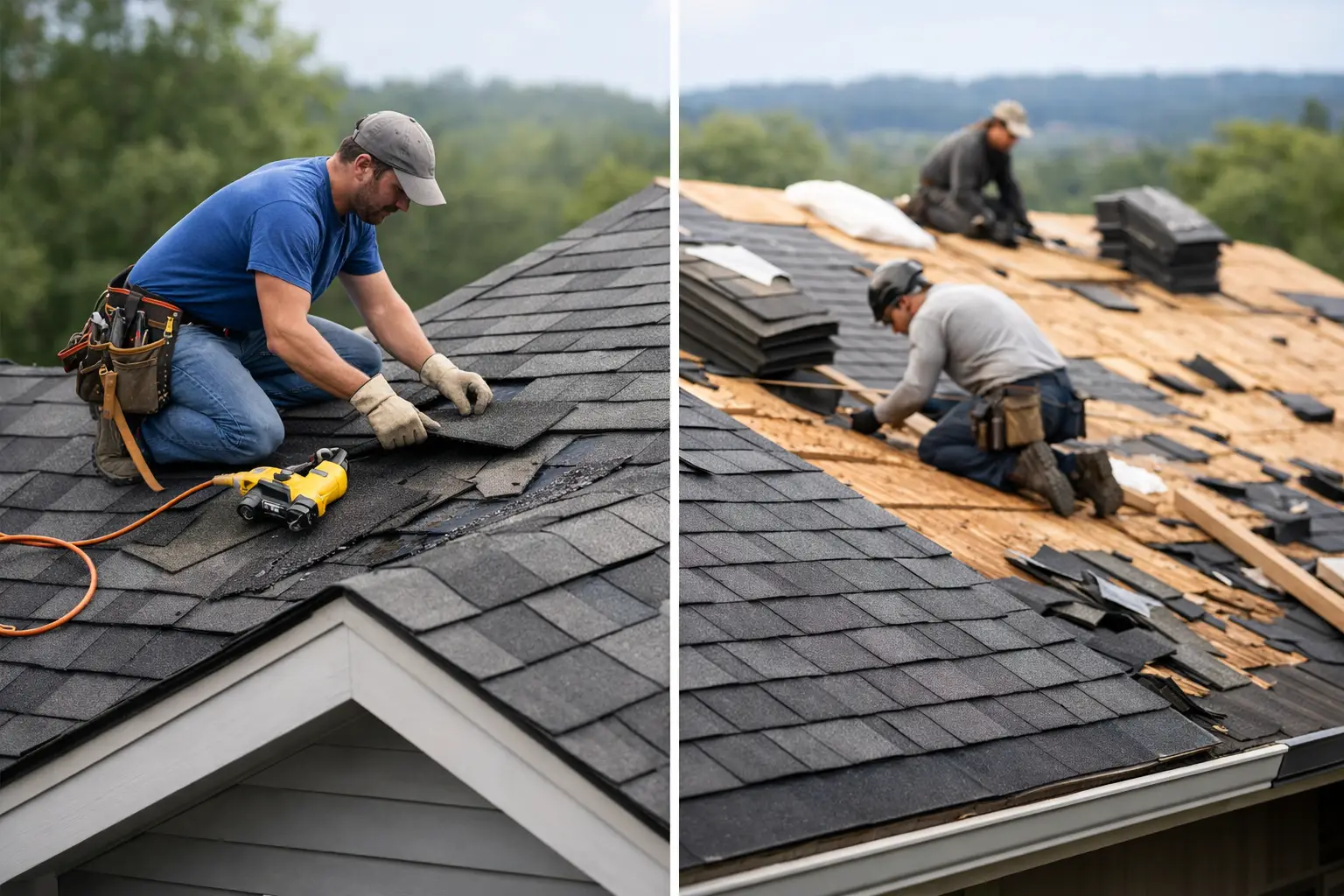
A roof problem rarely shows up at a convenient time. It usually starts with a water stain on the ceiling, shingles in the yard after a windstorm, or a home inspection report that raises more questions than answers. When that happens, the big decision is usually roof repair vs replacement – and for Colorado homeowners, the right answer depends on more than just price.
In the Denver Metro area, roofs take a beating. Hail, high winds, snow load, rapid temperature swings, and intense sun can all shorten a roof’s lifespan. That means a small issue may truly be a small issue, or it may be the early sign of broader system failure. The goal is not to sell more work than you need. The goal is to protect your home, preserve its value, and make a decision you will still feel good about a few years from now.
Roof repair vs replacement: the real difference
Roof repair is targeted. It addresses a specific problem such as lifted shingles, damaged flashing, a localized leak, or storm impact limited to one section of the roof. A good repair can add years of life to a roof that is otherwise in solid condition.
Roof replacement is broader. It means removing and replacing the roofing system because the existing roof has reached the point where patching no longer makes practical or financial sense. In some cases, replacement is driven by age. In others, it is caused by storm damage, recurring leaks, poor installation, or hidden deterioration beneath the surface.
The hard part is that both options can sound reasonable at first. A homeowner sees a leak and thinks repair. An insurance adjuster notes widespread damage and leans toward replacement. A buyer under contract wants the fastest path to closing. This is why a thorough inspection matters. The visible issue is not always the full story.
When a roof repair usually makes sense
A repair is often the smarter choice when the damage is limited and the rest of the roof is performing well. If your roof is relatively new, the materials are still in good shape, and the problem can be traced to one area, repair can be a responsible and cost-effective fix.
This is common after isolated wind damage or when flashing around a vent, chimney, or skylight begins to fail. It can also make sense if a few shingles were damaged by debris but the surrounding roofing system remains intact. In these cases, the repair is not a shortcut. It is the proper solution.
Repairs also make sense when the roof has meaningful remaining life and matching materials are available. That last point matters more than many homeowners realize. If a repair leaves you with mismatched shingles or uneven wear patterns, it can affect both curb appeal and long-term performance.
A quality repair should solve the current issue without creating a new one. It should blend in as much as possible, protect the vulnerable area, and give you a realistic sense of how much life the roof has left.
Signs repair may be enough
If leaks are limited to one area, storm damage is spot-specific, and the roof is well under its expected lifespan, repair is often worth serious consideration. The same is true when the decking is sound and there are no signs of widespread granule loss, sagging, or repeated patchwork across multiple sections.
That said, a repair is only a good value if it is buying you time in a meaningful way. Spending money on a fix that lasts one season before larger issues appear is rarely the best use of your budget.
When replacement is the better investment
There are times when roof replacement is simply the more responsible answer. If the roof is nearing the end of its life, has sustained widespread storm damage, or has multiple active leak points, continued repairs can become expensive and frustrating fast.
An older roof often fails in layers. You may notice a leak in one room, but the underlying issues can include brittle shingles, compromised underlayment, failing flashing, or moisture intrusion in areas you cannot see from the ground. At that stage, repairs may address symptoms without fixing the cause.
Replacement can also make more sense if your roof has already been repaired several times. Frequent patching tends to be a signal that the system as a whole is wearing out. It may keep you going temporarily, but it usually does not restore full reliability.
For many homeowners, replacement is also about peace of mind. A new roof can improve weather protection, help with resale, support insurance documentation, and reduce the stress of wondering where the next problem will show up.
Common indicators that replacement is likely needed
If shingles are curling, cracking, or losing granules across large sections, if soft spots are present, or if storm damage affects multiple slopes, replacement should be on the table. The same goes for roofs with recurring leaks, visible structural concerns, or signs that previous installation work was not done correctly.
For Colorado homes, hail can be a major tipping point. Even when a roof is not actively leaking, hail impact can weaken shingles and shorten the roof’s usable life. That kind of damage is easy to underestimate without a trained inspection.
Cost matters, but so does timing
Most homeowners naturally start with cost. Repairs are less expensive upfront, sometimes by a wide margin. But the lower immediate price does not always make repair the cheaper option over time.
If you spend money on repeated service calls, interior leak mitigation, and partial fixes over the next two years, a replacement that seemed expensive at first may have actually been the better financial decision. On the other hand, if a focused repair gives you another five to eight years from a roof that is otherwise healthy, replacing too soon may not be the best use of your money either.
This is where honesty from your contractor matters. You need a clear explanation of what is damaged, what is still performing, and how long each option is realistically expected to last. You also need someone willing to discuss trade-offs without pressure.
Insurance can change the equation
For storm-related damage, insurance may play a significant role in the roof repair vs replacement decision. If an inspection shows covered hail or wind damage across enough of the roof, replacement may be recommended and partially covered depending on your policy, deductible, and claim outcome.
That does not mean every storm leads to a full replacement. Some claims result in approved repairs. Others may be denied if the damage is considered wear and tear rather than sudden storm impact. This is another reason documentation matters. A contractor who understands the inspection process can help identify legitimate damage and communicate findings clearly.
Homeowners should also remember that insurance decisions and roofing decisions are related, but not identical. A claim outcome does not always answer what is best for the home long term. Sometimes a repair is approved, but the broader condition of the roof still deserves careful consideration.
Why Colorado homeowners need a local perspective
Roofing decisions are never made in a vacuum, especially in Colorado. Materials age differently here. Exposure levels vary by slope and orientation. A roof on the west side of a home may show different wear than one on the north side. Hail history, elevation, ventilation, and attic conditions all matter.
That is why local experience is not a small detail. A locally owned, licensed and insured contractor with a strong track record in Colorado is more likely to recognize whether your issue is isolated, storm-related, age-related, or part of a larger pattern common in this market.
At 5280 Creative Construction Solutions, that homeowner-first mindset is central to the process. The job is not just to identify damage. It is to help families make a sound decision with less stress, better communication, and confidence that the recommendation fits the home.
How to make the right call
The best next step is not guessing from the driveway or waiting for the next storm to decide for you. It is getting a professional roof inspection that looks beyond the obvious symptom. A trustworthy inspection should include the roof’s age, condition, storm exposure, ventilation factors, repair history, and whether the current issue is isolated or systemic.
If the recommendation is repair, you should understand why repair is enough and how long it is expected to hold. If the recommendation is replacement, you should get a straightforward explanation of what makes replacement the better investment now rather than later.
A good roofing company will not make the choice feel vague. They will walk you through it in plain language, answer questions directly, and help you balance budget, timing, insurance, and long-term value.
Your roof protects everything under it. When the decision is roof repair vs replacement, the right answer is the one that solves the real problem, not just the most visible one. A careful inspection and clear guidance can save you money, stress, and a lot of future headaches.
Leave a Reply